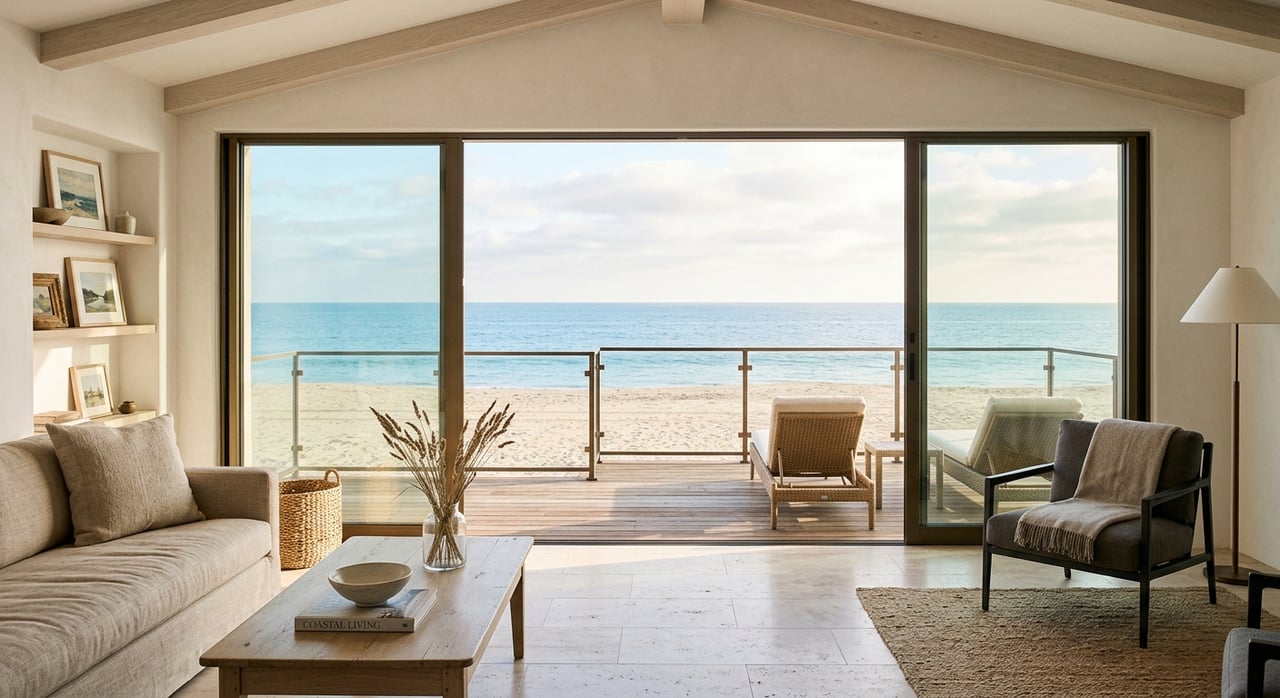
Ever wonder what oceanfront life really feels like when the beach is not a weekend destination, but part of your front yard? Living on the Manhattan Beach Strand can be stunning, energetic, and surprisingly practical all at once. If you are thinking about buying along this iconic stretch, it helps to understand both the everyday perks and the real tradeoffs before you make a move. Let’s dive in.
The Strand lifestyle at a glance
The Manhattan Beach Strand is a paved pedestrian path that runs mostly along the Pacific shoreline, just east of the Marvin Braude Bike Path. The City of Manhattan Beach describes it as providing about two miles of continuous pedestrian access along the beach, and the area includes more than two miles of ocean frontage, 115 acres of sandy beach, and the city’s well-known pier.
That means Strand living is shaped by constant connection to the shoreline. You are not tucked away from the beach scene. You are living in the middle of it, with direct access to the sand, the path, and the daily rhythm of people walking along the coast.
What daily life feels like
Mornings start outside
For many residents, the day naturally begins with a walk, a coffee run, or time on the sand. The Strand is part of the city’s broader pedestrian network, so the environment is built around moving on foot and enjoying the coastline at a slower pace.
You are also close to the kinds of activities that define Manhattan Beach. Los Angeles County lists surfing, swimming, volleyball, fishing, and windsurfing as core beach activities, and El Porto at the north end is especially known as a popular surf spot where lessons are available.
The pier and downtown stay in your routine
The Manhattan Beach Pier is one of the anchors of life here. According to the city, it is about 928 feet long, dates to 1920, is a State Historical Landmark, and includes the Volleyball Walk of Fame and the Roundhouse Aquarium and Teaching Center.
Downtown Manhattan Beach also becomes part of your everyday pattern. The city highlights shopping, restaurants, surfboard rentals, and beach-front bike-path access nearby, so living on the Strand often means you can walk to more of your routine than you could in many other coastal neighborhoods.
It is active, not isolated
One of the most important things to understand is that the Strand is not about total seclusion. It is a public-facing coastal setting with steady foot traffic, beach activity, and a visible connection to the community.
If you love energy, people-watching, and being immersed in a classic beach-town atmosphere, that can be a huge plus. If you are looking for a quieter, more tucked-away coastal feel, inland Manhattan Beach may offer a different day-to-day experience.
Walkability is a major draw
Walkability is one of the biggest reasons people are drawn to the Strand. The city’s mobility planning treats the Strand as part of a broader pedestrian system that includes walkstreets and Veterans Parkway, with a transportation vision that emphasizes walking, bicycling, and transit access.
For you, that can translate into fewer short car trips and more opportunities to move through the day on foot. Whether you are heading to the pier, meeting friends downtown, or just getting outside for fresh air, the location supports a lifestyle that feels connected and convenient.
Beach access comes with real conveniences
Living on the Strand means beach access is not theoretical. It is immediate. County information notes that the beach includes lifeguards during daylight hours, as well as restrooms, showers, stairs, ramps, and bike-path access.
Those details matter more than they may seem at first. When the beach is part of your daily life, having practical infrastructure nearby makes it easier to fit in a swim, rinse off after the sand, or host a casual day by the water without much planning.
The biggest tradeoff is privacy
Expect visibility
Privacy is one of the clearest tradeoffs of Strand living. Because the Strand is a public pedestrian corridor that runs directly along the shoreline, homes there are naturally more exposed to foot traffic and public visibility than homes on more conventional residential streets.
That does not mean the lifestyle is chaotic. It does mean you should expect a more open, public-facing environment where walkers are regularly passing by and the beach is a shared civic space, not a private edge.
Oceanfront ownership has more exposure
There is also the everyday reality of coastal conditions. Homes directly on the oceanfront typically face more sand, salt, wind, and weather exposure than homes farther inland.
That is simply part of what comes with being this close to the water. For some buyers, that is a small trade for the setting. For others, it is an important ownership consideration to think through early.
Noise and activity are part of the picture
The Strand can feel lively throughout the year, and especially during peak summer periods. Los Angeles County notes that the AVP Manhattan Beach Open brings large crowds, which can affect beach access, parking, and the overall level of activity nearby.
On a normal day, you may still hear the natural soundtrack of a busy coastal area: walkers, beachgoers, and public activity. It is not the same as living in a commercial district, but it is also not silent oceanfront seclusion.
The city actively manages noise
The good news is that Manhattan Beach has rules in place to help protect residential quality of life. The city says loud parties and after-hours construction can be reported to police dispatch, and construction is limited to Monday through Friday from 7:30 AM to 6:00 PM and Saturday from 9:00 AM to 6:00 PM.
Construction is prohibited on Sundays and city-observed holidays. The city also requires a sound amplification permit for many amplified-sound uses, which helps balance the area’s active beach setting with the needs of residents.
Parking takes planning
Parking is one of the most practical issues to understand before buying on the Strand. The city says it maintains eight public parking lots with 899 spaces and 1,377 single-space meters, along with two county-owned beach lots and the state-owned upper and lower pier lots.
In simple terms, there is a lot of public parking supply serving Manhattan Beach, but demand is also high. For guests and visitors, beach access is easy in a general sense, yet finding spontaneous parking is not always effortless.
Meter rules matter
The city’s parking information says meters are always in effect unless otherwise posted. That is an important everyday detail if you regularly have friends, family, or service providers visiting.
If you are comparing the Strand with inland neighborhoods, this is one of the biggest lifestyle differences. Parking around the beach is more actively managed and less casual than many buyers first expect.
Resident permits help, but only somewhat
Manhattan Beach offers overnight residential parking permits for the Upper Pier Lots, the 26th Street Lot at Bruce’s Beach, and the El Porto Lot. According to the city, permits cost $30 for three months, are limited to two per address, and are valid from 6:00 PM to 8:00 AM.
The El Porto Lot is locked around 8:00 PM nightly and opens around 6:00 AM. That setup can provide relief, but it also shows how structured beach-area parking can be compared with inland residential streets.
Getting around without relying only on a car
While most households will still likely use a car, there are transportation alternatives. The city’s transit information lists Beach Cities Transit Line 109, which serves Manhattan Beach Pier and Downtown Manhattan Beach and connects to Redondo Beach, Hermosa Beach, Manhattan Village, El Segundo, and the LAX City Bus Center.
The same city information also points to Line 102 and Dial-A-Ride service for eligible residents. So while the Strand is not necessarily car-free living, it can support a more flexible mix of walking, transit, and shorter vehicle trips.
Rules shape the beach experience
Part of loving the Strand is understanding that the beach is a highly used public space with clear county rules. Los Angeles County beach rules prohibit animals on the sand, alcohol, smoking, tents, overnight camping or sleeping, fires and barbecues, fireworks, glass containers, amplified music, and driving or parking on the sand or bike path.
For some buyers, these rules are a plus because they help preserve order and safety. For others, they are a reminder that beach living here is very different from owning a private outdoor retreat where anything goes.
Biking has its own lane
A common point of confusion is biking. The city’s current safety guidance says riding is prohibited on the Strand, while the adjacent Marvin Braude Bike Trail is intended for bicycle traffic.
That distinction helps explain why the Strand feels pedestrian-first. If your ideal daily routine includes biking, it is still very accessible, but the bike activity happens next door rather than on the Strand itself.
Who tends to love living on the Strand
The Strand often appeals most to buyers who want true oceanfront access, strong walkability, and a front-row connection to Manhattan Beach life. If you value stepping outside to the coastline, walking to the pier and downtown, and living in a place that feels distinctly coastal every day, it is hard to replicate this setting anywhere inland.
At the same time, the best-fit buyer usually understands the tradeoffs. Less privacy, more public activity, more structured parking, and more direct exposure to ocean conditions are all part of the package.
Final thoughts on Strand living
Living on the Manhattan Beach Strand is less about escaping the beach scene and more about fully participating in it. You get unmatched access to the shoreline, a highly walkable setting, and a daily routine shaped by the pier, downtown, and the rhythm of the coast.
If that sounds like the lifestyle you want, it helps to work with someone who understands the nuances of South Bay coastal property beyond the listing photos. If you are thinking about buying or selling in Manhattan Beach or anywhere along the South Bay coast, connect with Bill Ruane for straightforward local guidance.
FAQs
Can you bike on the Manhattan Beach Strand?
- No. City safety guidance says riding is prohibited on the Strand, and cyclists should use the adjacent Marvin Braude Bike Trail.
Are dogs allowed on the beach in Manhattan Beach?
- No. Los Angeles County beach rules say animals are not allowed on the beach.
Is parking easy near the Manhattan Beach Strand?
- Parking is manageable, but it usually takes planning. The city has public lots and meters, but meters are always in effect unless otherwise posted and beach parking is tightly managed.
Is living on the Manhattan Beach Strand quiet?
- It can be quieter than a busy commercial area, but it is not silent. Beach traffic, seasonal events, and construction activity can all affect noise levels.
Can you have a fire or grill on the sand at Manhattan Beach?
- No. Los Angeles County beach rules prohibit fires and barbecues on the beach.
What makes the Manhattan Beach Strand different from inland Manhattan Beach?
- The biggest differences are direct beach access, stronger walkability, more public activity, less privacy, and more managed parking than you would typically find inland.